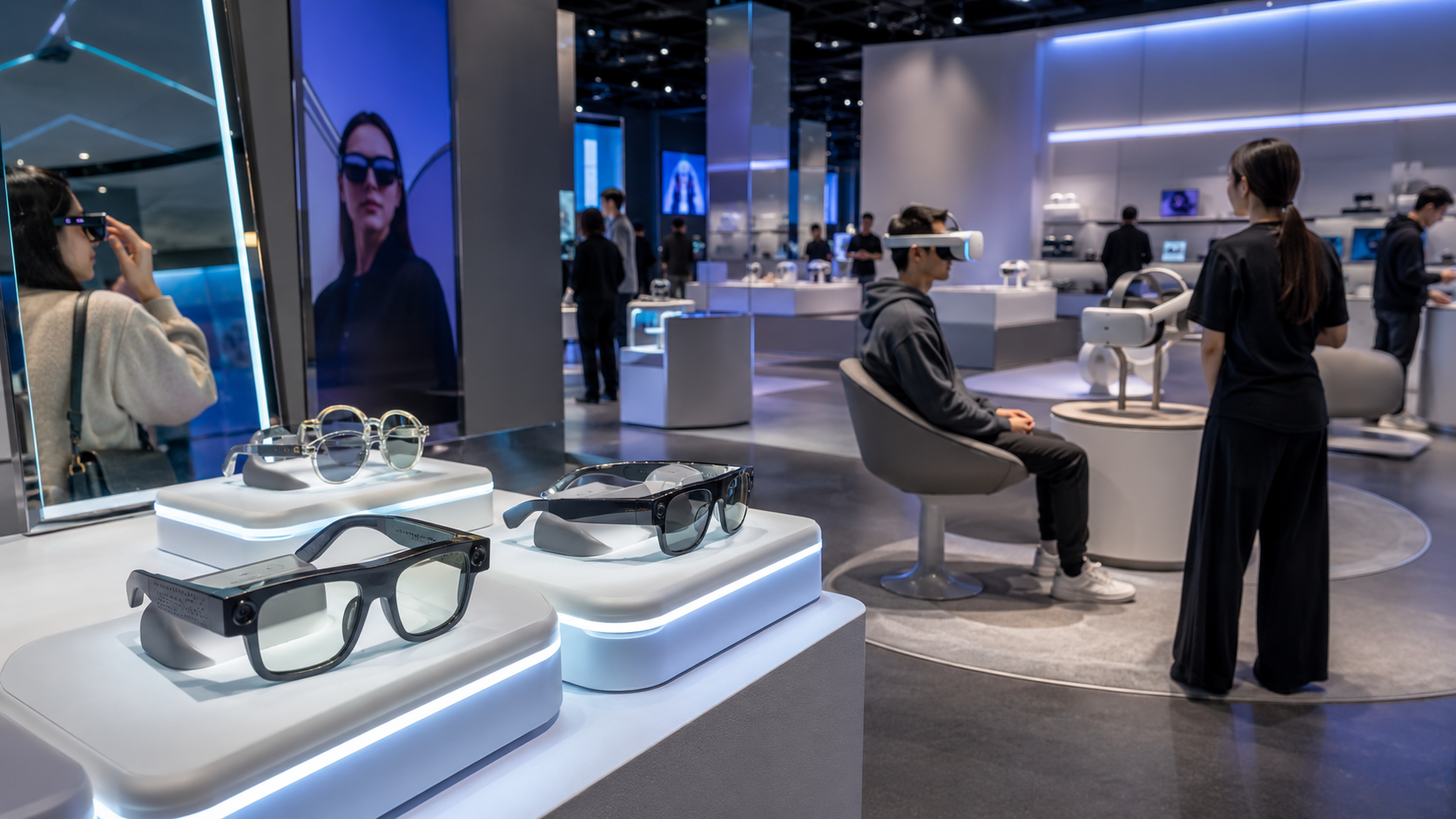
Meta is expanding how people can try its AI glasses and VR headsets in stores. The company is launching larger Meta Lab spaces inside select Best Buy locations, giving shoppers a single place to test smart glasses, display-equipped glasses, and Quest headsets before buying.
What Is the News?
Meta is rolling out Meta Lab at Best Buy, a new in-store experience designed for hands-on product demos. These spaces will bring together Meta's AI glasses and VR headsets instead of keeping them in separate retail displays.
The new spaces are expected to be around 900 square feet and will include interactive demos, smart mirrors, personalized fittings, and support from dedicated Meta sales specialists.
Why Is This in the News?
This is in the news because Meta has been pushing heavily into AI glasses while still maintaining its Quest VR headset business. Bringing both product lines together in Best Buy stores helps shoppers understand Meta's hardware ecosystem in one place.
It also matters because VR and AI glasses are hard to explain with normal online product pages. Many people need to try a headset or smart glasses in person before they understand the value, comfort, display quality, and use cases.
Purpose of Meta Lab at Best Buy
The main purpose of Meta Lab is to make Meta hardware easier to experience before purchase. Shoppers will be able to test AI glasses such as Ray-Ban Meta and Oakley Meta devices, along with Meta Quest VR headsets, inside a guided retail environment.
Meta also wants to reduce confusion between its different wearable and immersive products. A combined demo space can show how AI glasses, display glasses, and VR headsets fit into different parts of daily life, entertainment, communication, and productivity.
Key Points
- Meta is launching Meta Lab spaces inside Best Buy stores.
- The spaces combine demos for AI glasses and VR headsets.
- Products include Ray-Ban Meta, Meta Ray-Ban Display, Oakley Meta, Quest 3, and Quest 3S.
- The demo spaces include interactive experiences, smart mirrors, and personalized fittings.
- More than 50 Best Buy stores in the U.S. and Canada are expected to receive Meta Lab spaces.
- The first locations are planned for this summer.
- Dedicated Meta sales specialists will help customers understand and try the products.
Usefulness for Shoppers
This setup is useful because wearables and VR headsets are personal products. Comfort, fit, display clarity, camera placement, audio quality, and control style can be difficult to judge from a website.
A shopper can compare AI glasses and VR headsets in one visit, which makes the decision easier. Someone interested in lightweight glasses may discover that a Quest headset is better for gaming, while someone curious about VR may realize AI glasses are more useful for everyday capture and assistance.
Advantages
- Hands-on demos can help customers understand products faster.
- Personalized fittings are important for glasses-based devices.
- Combining AI glasses and Quest headsets shows Meta's full hardware lineup more clearly.
- Retail specialists can answer questions that online listings cannot.
- More in-store demos could help VR reach people who have never tried a modern headset.
- Best Buy gives Meta access to a large mainstream electronics retail audience.
Disadvantages and Concerns
The main limitation is scale. Even with more than 50 locations, many shoppers will still live far from a Meta Lab store. The experience may help awareness, but it will not instantly solve availability for every region.
Another concern is whether customers will understand the difference between AI glasses, display glasses, and VR headsets. Meta will need clear demonstrations so shoppers do not confuse products with very different purposes.
Privacy may also come up, especially for AI glasses with cameras and microphones. In-store demos must clearly explain what the devices can record, how data is handled, and when indicators show that capture is active.
Impact
Meta Lab at Best Buy could make AI glasses and VR hardware feel more mainstream. Instead of being niche products that people only see online, they will become devices that shoppers can touch, wear, and test in a familiar retail store.
The move also suggests Meta is trying to align its AI glasses strategy with its existing VR business. Showing both categories together may help customers see Meta as a broader wearable and immersive computing company, not only a VR headset maker.
Why This Matters
This matters because many new hardware categories succeed only after people can try them. VR headsets can be difficult to describe, and AI glasses depend heavily on comfort, style, and trust.
By putting these products in a guided retail environment, Meta may improve customer confidence and reduce hesitation around unfamiliar AI and XR devices.
Conclusion
Meta Lab at Best Buy is a practical step toward making AI glasses and VR headsets easier to understand. The new spaces will give shoppers a chance to compare Meta's wearable and immersive hardware through real demos rather than online descriptions.
The success of the rollout will depend on store availability, clear product explanations, strong privacy messaging, and whether hands-on demos convince more people that AI glasses and VR headsets are useful in daily life.
Source reference: Road to VR