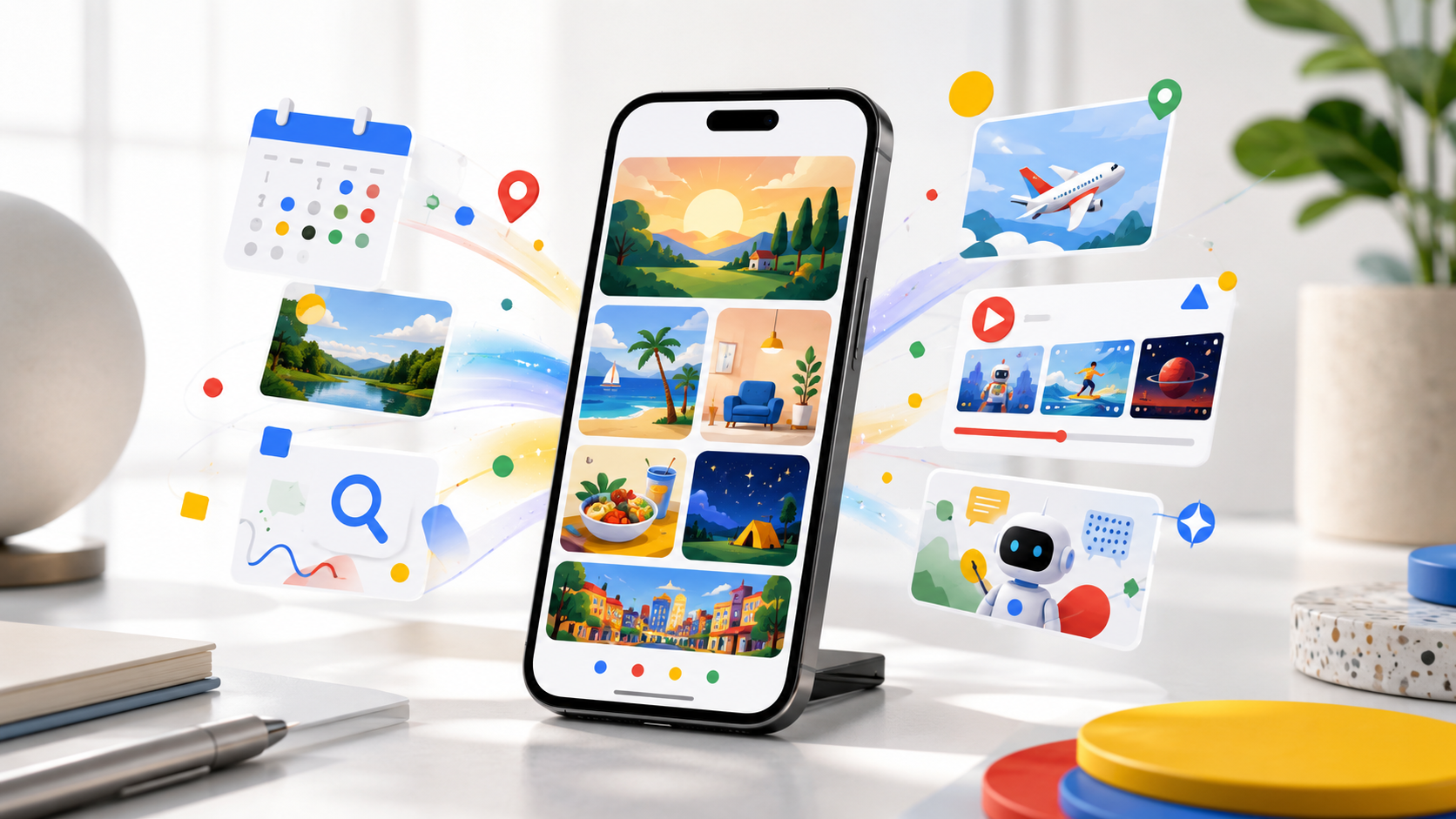
Google is testing a new AI-powered app called Dreambeans that turns parts of a user's digital life into short illustrated stories. The app is designed to create a small set of personalized daily ideas using information from connected Google services, while presenting those ideas in a more visual and playful format.
Why Is This in the News?
Dreambeans is in the news because it shows how Google is experimenting with more personal AI experiences. Rather than simply answering questions like a chatbot, the app tries to understand context from Google services and turn that context into useful, creative, and visual suggestions.
The app also stands out because of its unusual name and its focus on turning everyday digital signals into cartoon-style story ideas. It is part of a larger trend where tech companies are building AI tools that feel more like personal companions than traditional search or productivity apps.
Purpose of Google Dreambeans
The main purpose of Dreambeans is to help users discover useful ideas from their own digital activity. With permission, the app can connect information from services such as Gmail, Calendar, Photos, YouTube, and Search History to create daily story suggestions.
For example, if a user has travel plans, upcoming events, new hobbies, or repeated interests across Google services, Dreambeans may turn that information into a small visual story. The goal is to make personal information easier to understand and more inspiring to act on.
Key Points
- Google Dreambeans is an experimental AI app from Google Labs.
- The app creates personalized AI-illustrated daily stories.
- It can use connected Google services such as Gmail, Calendar, Photos, YouTube, and Search History with user permission.
- Dreambeans is designed to provide a limited number of daily stories instead of an endless scrolling feed.
- The app is currently available only to eligible U.S.-based Google AI Ultra subscribers on Android and iOS.
- Google also offers a waitlist for users with a personal Google account.
- Privacy controls allow users to choose connected services and delete their data.
How Dreambeans Works
Dreambeans uses Google's Personal Intelligence approach to connect information across approved Google apps. After reviewing the available signals, the app creates a small batch of AI-generated story cards that are meant to be useful, timely, or inspiring.
The idea behind the name is connected to how the app processes information while the user is away or asleep. By morning, it can present a more concentrated set of suggestions, similar to receiving a fresh set of ideas to start the day.
Usefulness for Everyday Users
Dreambeans could be useful for people who want personalized ideas without manually searching across emails, calendars, photos, videos, and browsing history. The app may help surface reminders, places, topics, and activities that match what is already happening in a user's life.
It may also appeal to users who feel tired of endless scrolling. Because Dreambeans provides only a limited number of daily stories, it is designed to offer quick inspiration instead of keeping people stuck in an infinite feed.
Advantages
- Personalized suggestions can feel more relevant than generic content feeds.
- AI-illustrated stories make information easier and more enjoyable to understand.
- Limited daily stories may reduce doomscrolling and phone addiction.
- Integration with Google services can help the app understand real user context.
- Users can choose which Google services to connect.
- Data deletion controls give users more control over their personal information.
Disadvantages and Concerns
The biggest concern is privacy. Dreambeans works by using information from personal Google services, which may include sensitive emails, calendar events, photos, search activity, and video interests. Even with permission controls, some users may not feel comfortable giving an AI app that much context.
Another limitation is availability. At launch, the app is restricted to eligible U.S.-based Google AI Ultra subscribers on Android and iOS, so most users will not be able to try it immediately.
There is also the question of usefulness. Personalized AI stories may be fun and creative, but the app will need to provide genuinely helpful suggestions if Google wants users to keep using it after the initial curiosity fades.
Impact on Consumer AI Apps
Dreambeans shows that consumer AI apps are moving beyond chat windows. Instead of only asking an assistant for answers, users may soon receive proactive suggestions based on their personal data, habits, schedules, and interests.
This could influence how future AI apps are designed. More companies may try to create daily AI experiences that combine personal context, visual storytelling, recommendations, and productivity features into a single mobile app.
Why This Matters
Dreambeans matters because it represents a new direction for Google AI. The company is not only using AI for search, productivity, or image generation. It is also testing how AI can turn personal data into a more guided and visual daily experience.
If the idea works well, it could make AI feel more personal and useful for everyday life. If it does not handle privacy, accuracy, and user trust carefully, it could also raise concerns about how much personal data people should connect to AI-driven apps.
Conclusion
Google Dreambeans is an unusual but interesting experiment in personal AI. By turning connected Google data into a limited set of illustrated daily stories, the app aims to give users inspiration without creating another endless content feed.
The concept could be useful for lifestyle ideas, reminders, discovery, and daily planning, but its success will depend on privacy controls, real-world usefulness, and whether users trust Google to connect AI with deeply personal information.
Source reference: TechCrunch